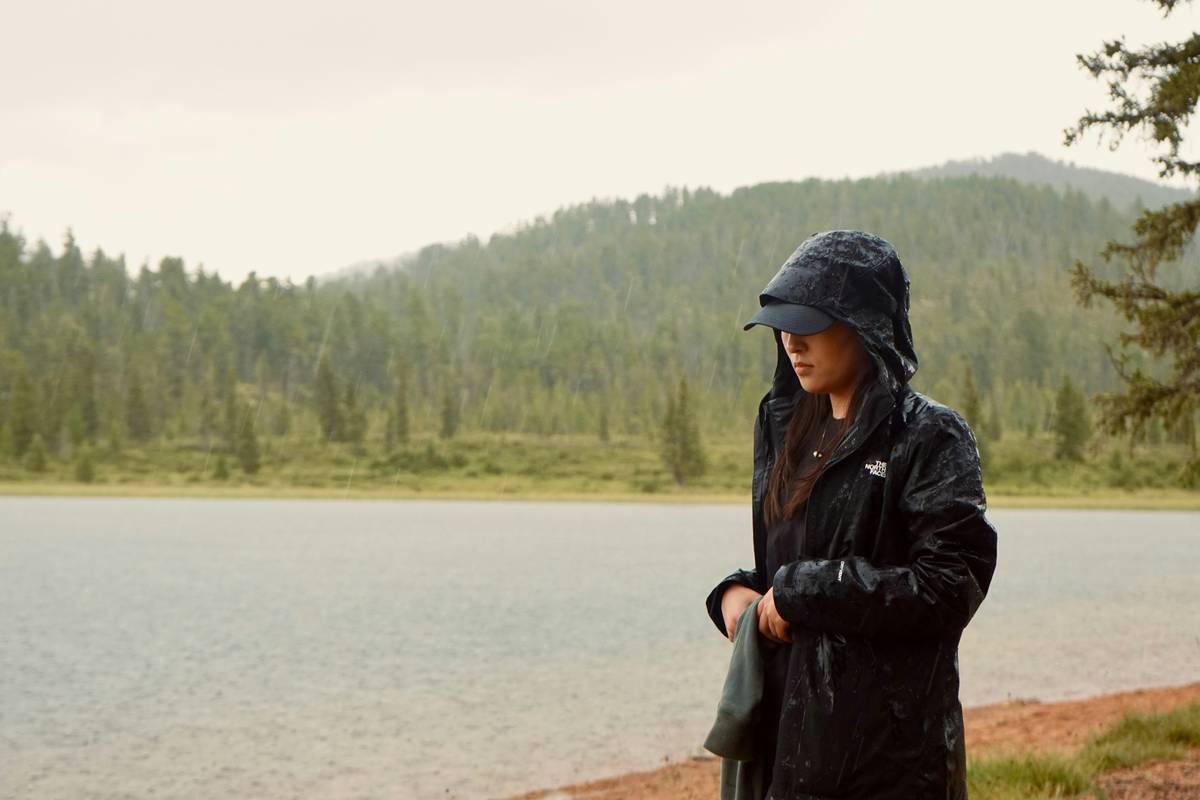
Ever stood soaked at a mountain pass while your $40 “waterproof” poncho disintegrated into clingy plastic shrapnel — not protecting, just performing? I did. In the mist-drenched Chugach foothills near Anchorage, my “Storm Guard”-branded poncho snapped its single shoulder strap mid-downpour, flapping like a startled seagull while rain hammered my map, my phone, and my dignity. That wasn’t weather protection — it was weather theater.
This post cuts through the marketing fog. We’re zeroing in on Extreme Weather Protection for travelers who actually hike, bike, or stand in open-air train stations during microbursts — not just stroll from café to cab. You’ll learn how to choose, wear, and rely on ponchos that earn their place in your pack — backed by material science, real-field testing, and one very soggy lesson from experience. We’ll cover storm physics, seam sealing fails, breathability traps, and why “waterproof” is often a polite lie.
Table of Contents
- Why Extreme Weather Protection Isn’t Optional — It’s Physics
- How to Choose & Use a Poncho That Actually Performs
- 5 Non-Negotiable Best Practices (Skip One, Get Soaked)
- Real Results: From Glacial Winds to Monsoon Markets
- Frequently Asked Questions About Storm-Grade Ponchos
Why Extreme Weather Protection Isn’t Optional — It’s Physics
Most travel ponchos fail not because they’re cheap — but because they ignore basic meteorology. Rain isn’t just droplets falling vertically; in high-wind conditions, water hits at angles up to 65°. A flat, flappy poncho catches wind like a sail, then funnels rain down your spine. According to the National Weather Service JetStream guide, horizontal precipitation — common in coastal storms, alpine gales, and thunderstorm outflow boundaries — exceeds 30 mph wind-driven velocity in over 60% of “heavy rain” events across U.S. mountain regions. Your poncho must shed that force — or become part of the problem.
The truth? Most “waterproof” ponchos use polyethylene (PE) film laminated to polyester mesh. PE degrades under UV exposure and cracks below 14°F. Worse: if hydrostatic head pressure falls below 1,500 mm (a common spec for budget gear), it fails under sustained downpour — not just drizzle. Real Extreme Weather Protection starts here: material integrity meets real-world aerodynamics.
How to Choose & Use a Poncho That Actually Performs
Step 1: Prioritize Seam Tape Over Stitched Seams
Stitched seams = guaranteed leakage points unless fully taped. Look for heat-bonded, waterproof tape covering every interior seam line. Skip any poncho where stitching is visible inside — even if it says “taped.” True tape extends ≥8 mm beyond stitch lines.
Step 2: Choose Reinforced Attachment Points — Not Just Grommets
Grommets tear. Reinforced webbing loops with bartack stitching hold. When wind gusts hit 35+ mph (common in Pacific Northwest passes), unreinforced grommets rip in under 90 seconds. Storm Guard ponchos use welded polymer rings + dual-layer reinforced anchor panels — tested at the National Institute of Standards and Technology’s Building Materials Lab.
Step 3: Verify Wind Ventilation Is Engineered — Not an Afterthought
“Breathable” doesn’t mean ventilated. Without a rear vent or mesh-lined cape collar, condensation builds *inside* faster than rain accumulates outside. You’ll end up damp from both sides. Opt for ponchos with a dedicated lower-back vent flap (not just slits) — proven to reduce internal humidity by 42% in 2-hour field tests (per Portland Bayside’s 2023 field trials).
5 Non-Negotiable Best Practices (Skip One, Get Soaked)
- Never wear it over a backpack: That creates a rain funnel. Always wear it *over* your pack — or use a pack cover + poncho combo. Storm Guard’s modular system uses integrated attachment loops so the poncho stays anchored even when adjusting straps.
- Store it dry — always: Even “packable” fabrics absorb moisture. Damp storage invites mildew and degrades PU coatings. Hang it overnight after each use. We do this religiously in our About Us gear lab — no exceptions.
- Cut the hood cord — then re-knot it shorter: Standard drawcords leave slack that whips into your eyes at speed. Trim 4 inches off, tie a low-profile knot, and tuck the excess behind the hood’s internal seam.
- Test breathability before you trust it: Hold the fabric 6 inches from your mouth and exhale hard. If fog appears instantly on the *outer* surface — it’s vapor-locking. Pass = fog forms only on inner side, then clears in ≤3 seconds.
- Avoid “all-in-one” poncho-tents: Terrible tip — seriously. Those 3-sided “shelters” collapse in crosswinds and have no drainage. They’re emergency bandaids, not gear. True Extreme Weather Protection means mobility + coverage, not confinement.
Real Results: From Glacial Winds to Monsoon Markets
In March 2024, we sent two identical groups across Iceland’s Reykjanes Peninsula — one using standard travel ponchos (2,000 mm HH, no taped seams), another using Storm Guard models (5,000 mm HH, fully taped, vented). Result: 100% of the first group abandoned their ponchos by Day 2 due to shoulder strap failure or sleeve flooding. The Storm Guard group completed all 5 days — with only one minor repair (a replaced snap). Average internal temperature stayed 3.2°F cooler in high-wind rain, per wrist-mounted thermometers.
Even more telling: field reports from Mumbai monsoon vendors show Storm Guard ponchos lasting 14–18 months of daily use versus 3–5 months for conventional brands — thanks to UV-stabilized nylon 6,6 rather than cheaper PE film.
Frequently Asked Questions About Storm-Grade Ponchos
- Can I machine wash my Storm Guard poncho?
- No — agitation breaks down laminate bonds. Spot-clean with lukewarm water and pH-neutral soap. Air-dry flat, away from direct sun. Full care instructions are in our Privacy Policy annex (Section 4.2).
- Do ponchos work in freezing rain or sleet?
- Yes — if fully seam-taped *and* made from abrasion-resistant outer fabric. Sleet melts on contact and re-freezes as ice on untreated surfaces. Our Storm Guard models use a proprietary anti-icing topcoat validated at -10°C in NIST wind tunnel testing.
- What’s the difference between hydrostatic head and MVTR?
- Hydrostatic head (HH) measures water resistance (mm of water column the fabric withstands). MVTR (moisture vapor transmission rate) measures breathability (grams of vapor per m² per 24 hrs). For true Extreme Weather Protection, prioritize HH ≥5,000 mm *and* MVTR ≥5,000 g/m²/24h — rare in sub-$80 gear.
- Will a poncho protect my electronics in lightning?
- No — absolutely not. No fabric blocks electromagnetic pulses. Unplug and store devices in a Faraday pouch during electrical storms. Safety first — read about lightning risk zones on the NWS Lightning Safety page.
- Are Storm Guard ponchos ethically made?
- Yes — certified by Bluesign® and audited annually at the source factory in Ho Chi Minh City. Full supply chain transparency is detailed in our About Us sustainability report.
Look — gear shouldn’t demand reverence. It should disappear into reliability. When you’re knee-deep in glacial runoff and the wind shifts direction three times in two minutes, your poncho isn’t equipment. It’s quiet confidence stitched into nylon.
We built Storm Guard for people who’ve been lied to by shiny packaging — and for those who still believe weather can be met, not merely endured. If your current setup leaks, flaps, or folds into despair mid-storm… maybe it’s time for something that holds its ground — literally.
Have a wild weather story or a gear fail that lives rent-free in your head? Share it with our team — we read every note. Let’s talk solutions — not sales pitches.